
I have a confession.
I used to be terrible at grocery shopping.
I would walk into H-Mart with vague intentions and walk out with two bags of enoki mushrooms, a jar of something fermented that I did not recognize, and absolutely no plan for what to cook that week. The mushrooms would wilt. The fermented jar would sit in the fridge door for six months. I would end up ordering takeout on Wednesday because I had ingredients but not meals.
Then I started treating grocery shopping like a product manager treats a sprint planning session.
Now I walk into H-Mart with a list. Not a rigid list — I am not a monster — but a structure. A framework that guarantees I leave with what I actually need and walk out under budget.
This is that system.
The Framework: Five Dinners, One Cart
Here is the logic I use every Saturday morning.
I plan for five dinners. That covers Monday through Friday. Weekends are for leftovers, takeout, or the occasional dinner party experiment.
Every shopping trip has four pillars:
One protein (that I build two dinners around)
One vegetable (that I build two dinners around)
One pantry staple restock (something I am running low on)
One wildcard (something I have never cooked before)
That is it. Four categories. Five dinners.
The magic is in the overlap. One protein appears in multiple meals. One vegetable does double duty. The pantry staple connects everything together. And the wildcard keeps it interesting without derailing the week.
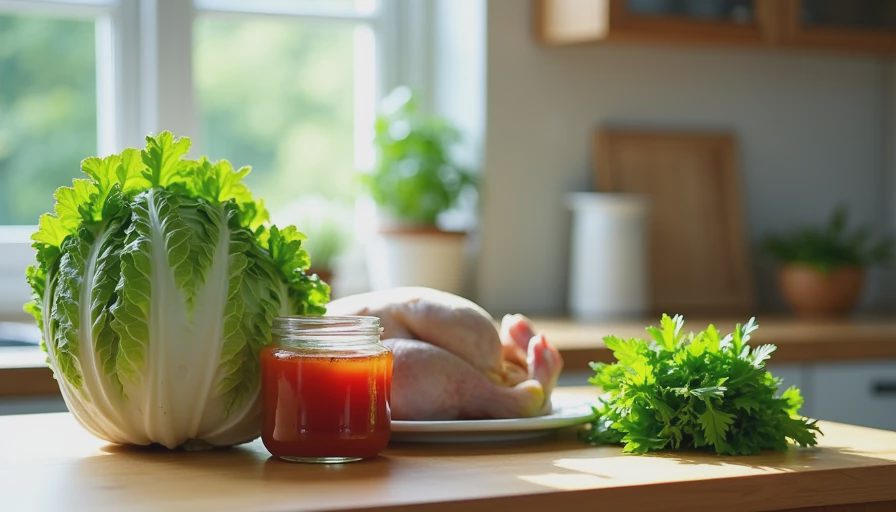
My September H-Mart Haul (A Real Trip)
I am going to walk you through an actual Saturday morning trip I made last week. This is not a curated "perfect" shopping list. It is what I actually bought, with the receipts to prove it.
The protein: One whole chicken (about 4 pounds)
The vegetable: One large head of Napa cabbage
The pantry restock: Gochujang (I was down to the last spoonful)
The wildcard: Fresh perilla leaves (they looked beautiful and I had never cooked with them before)
Total spent: $31.47
Here is how that turned into five dinners.
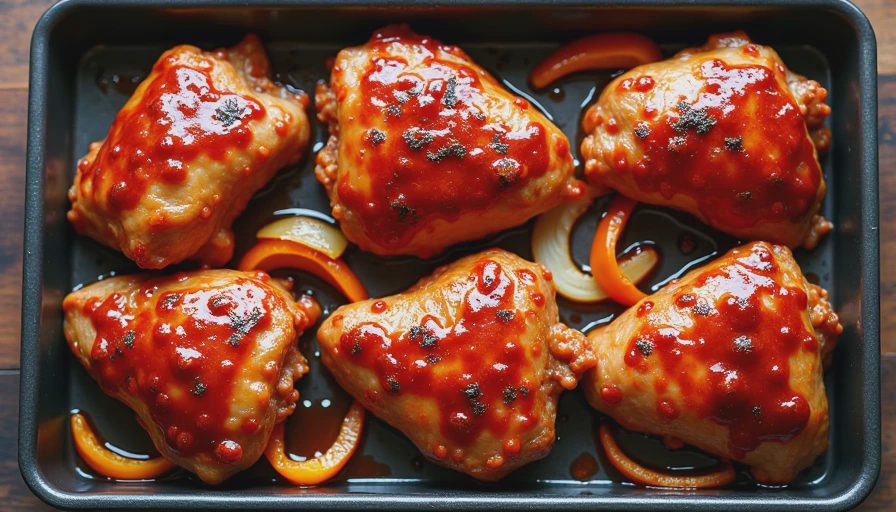
Dinner 1: Gochujang Chicken Thighs with Roasted Vegetables
I broke down the whole chicken into parts. The thighs and drumsticks became the first dinner.
I mixed two tablespoons of gochujang with a little soy sauce, honey, garlic, and sesame oil. Tossed the chicken pieces in it. Roasted them on a sheet pan with whatever vegetables I had in the fridge — onions, bell peppers, the ends of a zucchini.
Thirty-five minutes in a 425-degree oven. Served with rice.
This is the meal that made Matt say, "Okay, I actually like gochujang."
Dinner 2: Simple Chicken Noodle Soup (But with Cabbage)
The chicken breast came off the bone. I simmered the bones with onion, garlic, and ginger for an hour to make a quick broth. Shredded the breast meat. Added half the Napa cabbage, sliced thin. Tossed in some noodles.
No gochujang here. Just salt, fish sauce, a little lime. Clean and comforting.
This is the meal that used the cabbage for the first time.
Dinner 3: Crispy Chicken Skin Snack (Not a Dinner, But Hear Me Out)
The chicken skin got rendered down in a pan. I saved the fat for cooking later in the week and ate the crispy skins as a snack with a little salt and chili flake.
This is not a dinner. This is a life upgrade.
Dinner 4: Cabbage and Tofu Stir-Fry with Perilla
Remember the wildcard perilla leaves? I chopped them and stirred them into a quick stir-fry with the remaining Napa cabbage, some tofu, garlic, soy sauce, and a splash of rice vinegar.
The perilla added a bright, almost minty note that I did not expect. It made the whole dish feel fresh and unexpected.
Matt said, "This tastes like something we would order at a restaurant." Then he asked if perilla is the same as shiso. I told him technically yes, but that is a story for another post.
Dinner 5: Gochujang Cabbage and Pork (I Did Not Buy Pork, So This Is the Plan for Next Week)
Okay, I am cheating a little here. I did not actually make a fifth dinner with this haul. I had leftovers from dinner 1 and dinner 2 that stretched through Friday.
But if I were making a fifth dinner from the same ingredients, I would do this:
Slice the remaining cabbage. Sauté it with ground pork (which I would buy midweek if I needed to) and another spoonful of gochujang. Serve over rice. Top with a fried egg.
That is a dinner I have made a dozen times, and it never gets old.
The Real Lesson: Overlap Is Everything
The reason this system works is not the specific ingredients. It is the overlap.
One chicken gave me three completely different dinners. One head of cabbage appeared in two meals and a possible third. The gochujang connected dinner 1 and dinner 5. The perilla was a one-off that turned into a revelation.
If I had bought ingredients that only worked in one recipe, I would have spent twice as much and cooked half as much. Overlap is not just budget-friendly — it is fatigue-reducing. You are not starting from scratch every night. You are building on what you already have.
My Grocery List Template
Here is the blank template I fill out every Saturday morning. You can steal it.
Category | Item | Dinner Assignment |
|---|---|---|
Protein | ________ | Dinner 1 + Dinner 2 + leftovers |
Vegetable | ________ | Dinner 2 + Dinner 4 + optional Dinner 5 |
Pantry restock | ________ | Connects at least two dinners |
Wildcard | ________ | Dinner 4 (or a side dish) |
That is it. Four items. Five dinners.
Sometimes I buy more. Sometimes I buy less. But this is the minimum viable grocery list that guarantees I will not stand in front of the fridge on Wednesday having no idea what to make.
What I Avoid Buying
I want to be honest about the things I have learned not to buy, even when they are tempting.
Pre-cut vegetables — They cost twice as much and wilt twice as fast. I can chop.
Large quantities of fresh herbs — Unless I have a specific plan to use them. Herbs are aspirational purchases. I have too many wilted cilantro bunches in my past.
Anything in a jar that I cannot name — If I do not know what it is or how to use it, it becomes a museum piece in my fridge. The wildcard purchase should be one thing per trip, not a whole shelf.
Family-size meat packs — Unless I am feeding a crowd. They look like a deal but turn into a freezer Tetris situation that I inevitably forget about.
A Note on Budget
My H-Mart haul this week was $31.47. That is about $6.30 per dinner for two people.
That is not a flex. That is just what happens when you let overlap do the work. I am not chasing the cheapest ingredients. I am buying good ingredients and using them completely.
The perilla leaves were $2.99. They were worth every penny. They turned a simple cabbage and tofu stir-fry into something memorable. That is not an expense. That is an investment in not being bored by your own cooking.
The Product Manager's Post-Mortem
Every Sunday evening, I do a quick review of the week's meals. I write down:
What worked
What I would change
What I still have left in the fridge that needs to be used
This is not obsessive. It is a five-minute check-in that saves me money and mental energy the next week. I keep it in a Google Doc.
Last week's notes:
Gochujang chicken was a hit. Matt asked for it again. Perilla was surprisingly good — would buy again. Still have half a cabbage left. Plan: cabbage pancakes on Sunday.
That is it. No spreadsheets. No meal planning apps. Just a simple record of what actually happened.
Your Turn
If you have an H-Mart, an Asian grocery, or even just a well-stocked supermarket near you, try this system next time you shop.
Pick one protein. Pick one vegetable. Restock one pantry item. Buy one wildcard.
Then build five dinners around those four things.
You will spend less, cook more, and stand in front of the fridge wondering what to make a whole lot less often.
And if you end up with a new favorite ingredient, tell me about it. I am always looking for wildcard ideas.
— Elena
No comments yet — grab the first one.