I am going to say something that might make you uncomfortable.
Fish sauce belongs in chili.
Not instead of anything. Not as a replacement for salt or cumin or chili powder. As an addition. A small, sneaky, utterly transformative addition that does not make your chili taste like fish — it makes your chili taste like more chili.
I know what you are thinking. Fish sauce? In chili? That sounds wrong.
I thought the same thing the first time I saw a Thai cook add a splash to a beef stew. I was living in Bangkok at the time, standing in a tiny kitchen, watching someone make something that smelled familiar but tasted completely different. It was meaty. It was deep. It was savory in a way that I could not quite name.
I asked what the secret was.
She pointed to a bottle of fish sauce and said, "This makes everything taste more like itself."
That sentence rewired my brain.
What Fish Sauce Actually Is
Before we go any further, let us clear up what fish sauce is and what it is not.
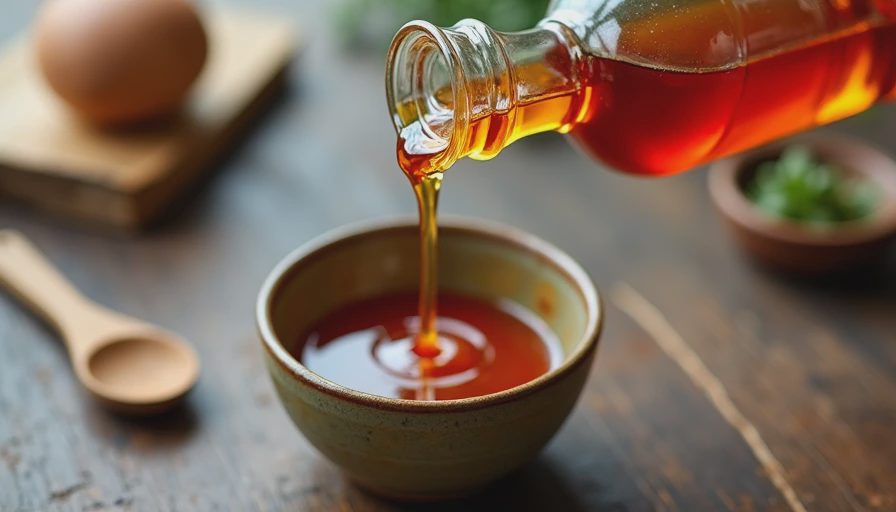
Fish sauce is not fishy in the way that canned sardines are fishy. It is not seafood-flavored. It is a clear, amber-colored liquid made from fermented anchovies and salt. The fermentation process breaks down the fish proteins into amino acids — specifically glutamates, which are the same compounds that give Parmesan cheese, soy sauce, and tomatoes their savory depth.
Fish sauce is umami in a bottle. Pure, concentrated, savory depth.
The "fishy" smell that hits you when you open the bottle is the fermentation aroma. It dissipates almost instantly when cooked. What remains is a profound savory note that makes everything around it taste richer, rounder, and more satisfying.
It is not a flavor. It is a flavor amplifier.
Why Chili Needs Fish Sauce
Chili is a dish that trades in depth.
You layer in chili powder, cumin, garlic, onion, tomatoes, meat. You let it simmer for hours. You build complexity. But there is a ceiling to how deep a pot of chili can go with traditional Western ingredients alone. The flavor profile tends to sit in the mid-range — warm, spicy, savory, but not quite mysterious.
Fish sauce adds a bass note. It anchors all those mid-range flavors to something deeper and more grounded. It does not change the character of the chili. It completes it.
Here is the science part, simplified:
Glutamates (fish sauce) + nucleotides (from tomatoes and meat) = synergistic umami.
That is a fancy way of saying that fish sauce and tomatoes and meat work together to create a savory intensity that is greater than the sum of its parts. It is the same chemical logic behind why Parmesan goes on pasta and why anchovy paste is a secret ingredient in so many Italian meat sauces.
Fish sauce is just anchovy paste in liquid form. And it happens to be way easier to keep in your pantry.
The Math of It
I like to think of fish sauce in chili as a 2:1 ratio.
Two tablespoons of fish sauce to one large pot of chili — about six to eight servings.
That is it. That is all it takes.
Start with two tablespoons. Stir it in about 15 to 20 minutes before you are ready to serve, so it has time to incorporate but not so much time that the volatiles cook off entirely. Taste. If the chili feels like it is still missing something, add another teaspoon. But two tablespoons is usually the sweet spot.
You are not looking for the fish sauce to announce itself. You are looking for the chili to taste more complete. If you can taste the fish sauce, you have added too much.
What It Replaces (and What It Does Not)
Fish sauce does not replace salt. It complements it.
The salt content in fish sauce is high — about 20 to 25 percent by volume. So when you add two tablespoons of fish sauce, you are effectively adding about a teaspoon of salt. That means you may need to reduce the additional salt you add to the chili.
But fish sauce is not just salt. It is salt plus glutamates plus fermentation byproducts. It is doing three jobs at once:
Salting
Umami-ing
Adding a layer of fermented complexity that makes the chili taste like it simmered for twice as long as it actually did
If you try to substitute soy sauce or Worcestershire, you will get a different result. They add their own distinct flavors. Fish sauce is the neutral option — it adds depth without adding a recognizable profile.
A Side-by-Side Test I Actually Ran
Before I wrote this post, I did what any former product manager would do. I ran an A/B test.
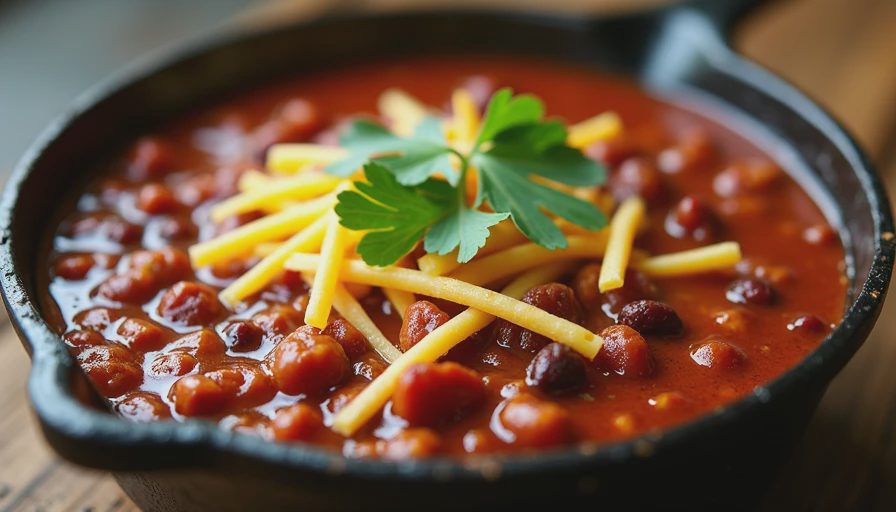
Two identical pots of chili. Same meat, same beans, same spice blend, same cooking time. One pot got two tablespoons of fish sauce added at the end. The other did not.
I poured both into bowls. I labeled them with Post-its. I fed them to Matt blind.
I said, "Taste both and tell me which one you like better."
Matt took a bite of Pot A. He took a bite of Pot B. He went back to Pot A. He went back to Pot B. Then he pointed to Pot A — the one with fish sauce — and said, "This one tastes like it has a secret."
I asked him what he meant.
He said, "It is deeper. More savory. I do not know what is different, but it feels more like comfort food."
That is exactly the reaction I was looking for. He could not identify the fish sauce. He just knew the chili was better.
The Fear Factor
I understand the hesitation. Fish sauce smells strong. It feels like it belongs in Southeast Asian food, not American chili. I spent years thinking of it as a "specialty ingredient" that was only for specific cuisines.
But here is what I learned: fish sauce is not a cuisine-specific ingredient. It is a pantry ingredient that happens to originate in Southeast Asia. It is useful anywhere you want savory depth.
Think of it like salt. Salt has no cuisine. Salt is universal. Fish sauce is just salt with more to offer.
If you are still nervous, start small. Add one teaspoon to a pot of chili and see how it goes. You can always add more. You cannot take it out.
Beyond Chili
Once you get comfortable with fish sauce in chili, the applications multiply.
Spaghetti sauce: A splash adds the same depth that anchovy paste does.
Beef stew: It amplifies the meatiness without changing the flavor profile.
Roasted vegetables: Toss broccoli or cauliflower with a little fish sauce and olive oil before roasting. It caramelizes beautifully.
Salad dressings: Mix fish sauce with lime, sugar, and garlic for a Southeast Asian vinaigrette that works on any green.
Braised greens: Collards, kale, or mustard greens benefit from a small amount in the braising liquid.
The pattern is the same across all of them: add a little fish sauce to something savory, and it will taste more like its best self.
A Note on Brands
If you are new to fish sauce, go for a Thai brand. Red Boat, Megachef, and Squid are all reliable. Avoid the cheap bottles that look like they cost two dollars — they tend to be heavy on salt and light on fermentation depth. You do not need the most expensive bottle on the shelf, just one that lists only anchovies and salt on the ingredient label.
If it has added sugar or preservatives, it is not the right bottle for this application.
The Flavor Transfer Philosophy
This is the first post in The Flavor Transfer series, and I want to be clear about the philosophy behind it.
Fusion cooking, as I practice it, is not about mixing cuisines. It is about moving principles.
You take a cooking principle from one tradition — fish sauce as umami amplifier, miso as an emulsifier, coconut milk as a base for braising, tamarind as a souring agent — and you apply it to a dish from another tradition. The result is not "fusion cuisine" in the gimmicky sense. It is just smarter cooking.
Fish sauce belongs in chili because chili needs what fish sauce provides. It has nothing to do with cultural mashups and everything to do with flavor physics.
That is what I want this blog to be about. Not border-crossing for the sake of it. Flavor logic that happens to cross borders because flavor does not know where it came from.
Over to You
I am going to ask you to do something.
Next time you make chili — whether it is your family recipe, a box mix, or the first recipe you find on Google — add two tablespoons of fish sauce about 15 minutes before you serve it.
Do not tell anyone you did it. Just watch what happens.
If someone says, "This is the best chili you have ever made," you can tell them. Or you can keep it as your secret. I will not judge either way.
I only ask that you let me know how it goes. I have been converting chili cooks one bottle at a time for years, and I am not about to stop now.
— Elena



No comments yet — grab the first one.