
I am from Texas by way of Southeast Asia. That is not a confusing backstory to me. It is just my life.
So when I make sticky chicken — a glaze-slicked, oven-roasted, sweet-and-savory thing that could be a weeknight dinner or a football Sunday centerpiece — I reach for tamarind the way a Texas cook reaches for ketchup or mustard.
Tamarind is sour. It is sweet. It is not a thing you taste and say, "Oh, that is tamarind." You taste it and say, "This tastes like barbecue sauce, but deeper. Like it has a secret."
It does have a secret. The secret is acid.
Why Tamarind Works in Texas-Style Glazes
Texas barbecue sauce is built on a few pillars: tomato, sugar, vinegar, and smoke. The vinegar provides the acid that cuts through fat. The sugar caramelizes. The tomato provides body.
Tamarind does almost the same job, but differently.
It has natural sugars that caramelize beautifully under heat. It has a sourness that is more rounded than vinegar — less sharp, more fruity. It has a subtle earthy quality that reads as "smoky" even when there is no smoker involved. And it has a thick, paste-like consistency that makes it perfect for glazing.
When I use tamarind in a glaze, I am not replacing Texas flavors. I am complementing them. The tamarind does what a good vinegar does, but it also adds a layer of fruit and depth that vinegar cannot provide.
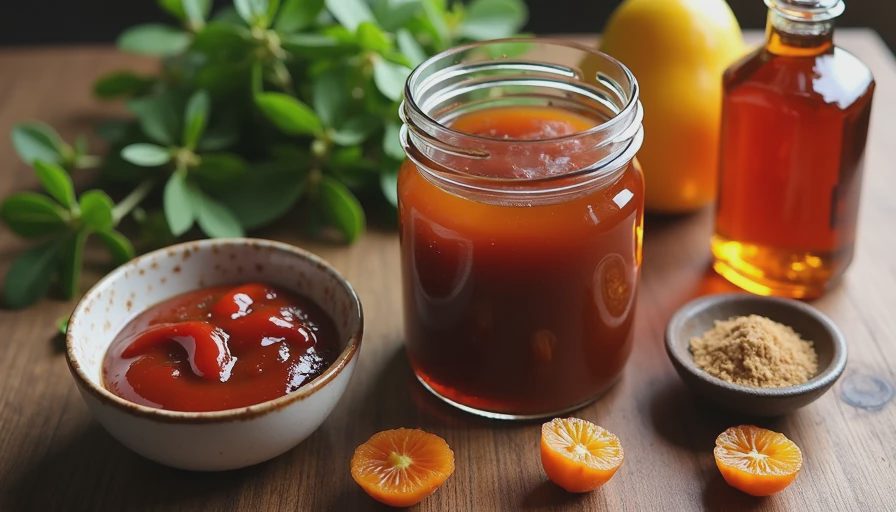
The Flavor Logic
Here is the breakdown of what tamarind contributes to a sticky chicken glaze:
Flavor Component | What Tamarind Provides | Texas BBQ Equivalent |
|---|---|---|
Acid | Tart, fruity tang | Vinegar |
Sweet | Natural fruit sugars | Brown sugar |
Body | Thick, syrupy texture | Ketchup or molasses |
Depth | Earthy, slightly smoky | Worcestershire or liquid smoke |
It is not a one-to-one replacement. It is an upgrade. Tamarind does all four things at once, with more complexity than any single Texas pantry ingredient.
The Recipe: Tamarind Sticky Chicken
This is the version I make when I want something that feels familiar but tastes surprising. It is quick enough for a weeknight and impressive enough for company.
Ingredients:
1.5 lbs chicken thighs (bone-in, skin-on if you can find them)
Salt and pepper
For the glaze:
3 tablespoons tamarind paste (concentrate, not whole pods)
2 tablespoons soy sauce
2 tablespoons honey or brown sugar
1 tablespoon fish sauce
1 tablespoon rice vinegar
1 teaspoon chili flakes (optional)
2 cloves garlic, grated
To garnish:
Sliced scallions
Lime wedges
Fresh cilantro (optional)
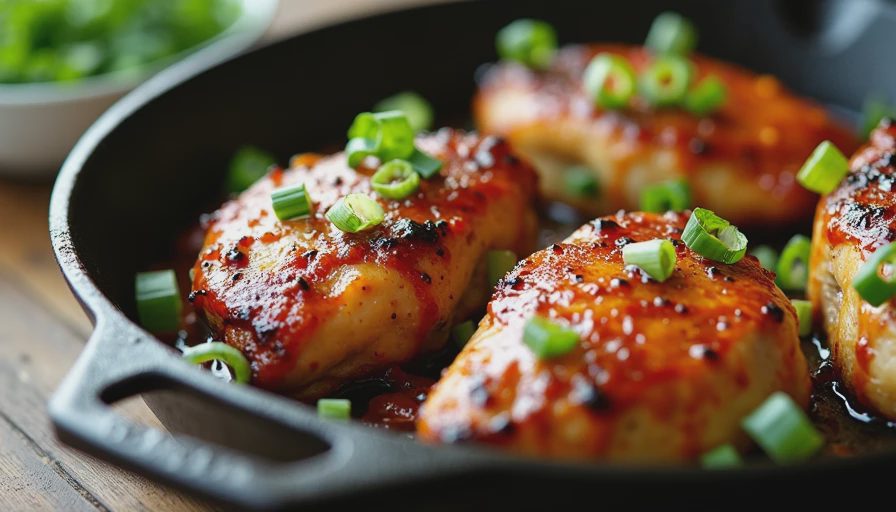
Method:
Step 1: Prep the chicken
Pat the chicken thighs dry with a paper towel. Season both sides with salt and pepper.
Step 2: Make the glaze
In a small bowl, whisk together the tamarind paste, soy sauce, honey, fish sauce, rice vinegar, chili flakes (if using), and grated garlic. The mixture should be thick but pourable. If it is too thick, add a tablespoon of water.
Step 3: Sear the chicken
Heat a cast-iron skillet or oven-safe pan over medium-high heat with a little neutral oil. Place the chicken skin-side down. Sear for 5 to 6 minutes, until the skin is golden brown and crispy. Flip and sear the other side for 2 minutes.
Step 4: Glaze and roast
Preheat the oven to 400°F. Brush the glaze over the tops of the chicken thighs. Transfer the skillet to the oven. Roast for 15 to 18 minutes, until the chicken is cooked through and the glaze is sticky and caramelized. Halfway through, brush on another layer of glaze if you have leftover.
Step 5: Rest and serve
Let the chicken rest for 5 minutes. Garnish with scallions, a squeeze of lime, and cilantro if you have it. Serve with rice, roasted vegetables, or a simple slaw.
The A/B Test
I ran this against a traditional Texas-style glaze — ketchup, brown sugar, vinegar, Worcestershire — on two identical batches of chicken.
Matt ate both. He liked both. But he went back for seconds on the tamarind version.
He said, "The regular one tastes like barbecue sauce. The tamarind one tastes like ... more. I do not know what it is. It is just more interesting."
That is the tamarind. It is not showing off. It is just doing more work.
What Else Tamarind Can Do
If you are not ready to put tamarind on chicken, start smaller.
Add a teaspoon to your next batch of barbecue sauce. It rounds out the acidity and adds color.
Mix it into a vinaigrette. Tamarind + lime + fish sauce + oil = a dressing that works on anything green.
Stir it into a pot of beans. It adds depth without dominating. No one will know why the beans taste better. They will just be better.
Tamarind is a team player. It does not need to be the star. It just makes everything around it more interesting.
Where to Buy Tamarind
You have options.
Tamarind paste (concentrate): Sold in jars or plastic tubs in Asian grocery stores. This is the easiest. Look for a dark brown, thick paste with no added sugar or preservatives. One jar lasts for months.
Tamarind pods: Whole pods with seeds inside. You soak them in hot water, strain the pulp, and make your own paste. More work, but the flavor is brighter.
Tamarind concentrate (block): A solid block sold in plastic-wrapped squares. Dissolve in hot water. This is common in South Asian grocery stores.
Tamarind powder: Least recommended. It is okay in a pinch, but the flavor is weaker.
My recommendation: Start with the jarred paste. One jar is about four dollars and lasts for months. Use it for glazes, dressings, marinades, and beans. Once you finish the jar, you will know whether you want to explore other forms.
Substitution Logic
If tamarind is not an option yet:
Instead of ... | Use ... |
|---|---|
1 tbsp tamarind paste | 1 tbsp lime juice + 1 tsp brown sugar |
1 tbsp tamarind paste | 1 tbsp Worcestershire sauce + 1 tsp molasses |
1 tbsp tamarind paste | 1 tbsp balsamic vinegar + ½ tsp honey |
These are approximations, not equivalents. The flavor will be different. But for a Tuesday night, they will get you close enough.
The Takeaway
Fusion does not have to mean reinventing the wheel. It can mean swapping one ingredient in a familiar format and letting it do the same job better.
Tamarind is sour. Sour belongs in glazes. The fact that it is from Southeast Asia does not make it foreign to Texas cooking. It makes it useful.
That is the whole logic. That is why it works.
— Elena


No comments yet — grab the first one.