
Matt does not trust tofu.
I do not mean he dislikes it. I mean he looks at a block of tofu the way some people look at a suspicious package at the airport. He does not know what it is, he does not know why it exists, and he is not sure he wants to find out.
I understand. Tofu has an image problem in American food culture. It is associated with blandness, deprivation, and food that is trying too hard to be something it is not.
But tofu is not the enemy. The approach is the enemy.
I had been serving tofu the way I learned to cook it — as a protein that could stand on its own. That works if you grew up eating tofu. It does not work if you grew up eating steak.
So I changed my approach. I stopped trying to make tofu replace meat. I started making tofu interesting.
The peanut sauce strategy was the breakthrough.
The Problem with Tofu (For Skeptical Eaters)
Here is what skeptical eaters experience when they eat tofu:
Texture confusion. Tofu is neither meat nor vegetable. It is soft, sometimes spongy, sometimes silky. It does not map onto any familiar texture category.
Flavor invisibility. Tofu does not taste like much on its own. That is its strength, but it is also its weakness. If you do not season it properly, it tastes like nothing.
Perception of "health food." Tofu has been marketed as a health food. For people who do not eat health food, that is a negative, not a positive.
Matt had all three problems. He would eat a piece of tofu, chew it, and say, "It is fine." That is Matt-speak for "I do not like this but I do not want to hurt your feelings."
I needed a new strategy.
The Peanut Sauce Strategy
Here is the logic:
Peanut sauce is rich, savory, salty, and slightly sweet. It is familiar to American palates — it tastes like Thai food, which is a known quantity. It has fat and body. It coats the tofu and gives it texture and flavor.
If I could make tofu taste like peanut sauce, Matt would eat it without thinking about what it was.
The approach:
Use firm or extra-firm tofu. Press it to remove water. This is non-negotiable.
Cube and roast it until crispy. Crispy tofu is acceptable tofu. Soft tofu is suspicious tofu.
Toss it in peanut sauce. The sauce does the heavy lifting.
Serve it in a format he already likes — rice bowl, noodle bowl, or lettuce wrap.
The Recipe That Worked
Ingredients:
For the tofu:
1 block (14–16 oz) extra-firm tofu
1 tablespoon neutral oil
Salt
For the peanut sauce:
½ cup creamy peanut butter (natural, no added sugar)
2 tablespoons soy sauce
1 tablespoon rice vinegar
1 tablespoon lime juice
1 tablespoon honey or brown sugar
1 teaspoon chili flakes (optional, skip for Matt's version)
1 clove garlic, grated
Warm water to thin (about ¼ cup)
For serving:
Rice or rice noodles
Cucumber, shredded
Carrots, shredded
Cilantro or basil
Crushed peanuts (optional)
Method:
Step 1: Press the tofu
Drain the tofu. Wrap it in a clean kitchen towel or paper towels. Place a heavy skillet or pot on top. Let it sit for at least 15 minutes. Pressing removes water, which helps the tofu get crispy in the oven.
Step 2: Roast the tofu
Preheat the oven to 400°F. Cut the pressed tofu into 1-inch cubes. Toss with oil and a sprinkle of salt. Spread in a single layer on a baking sheet. Roast for 20 to 25 minutes, flipping once halfway through, until golden brown and crispy on the outside.
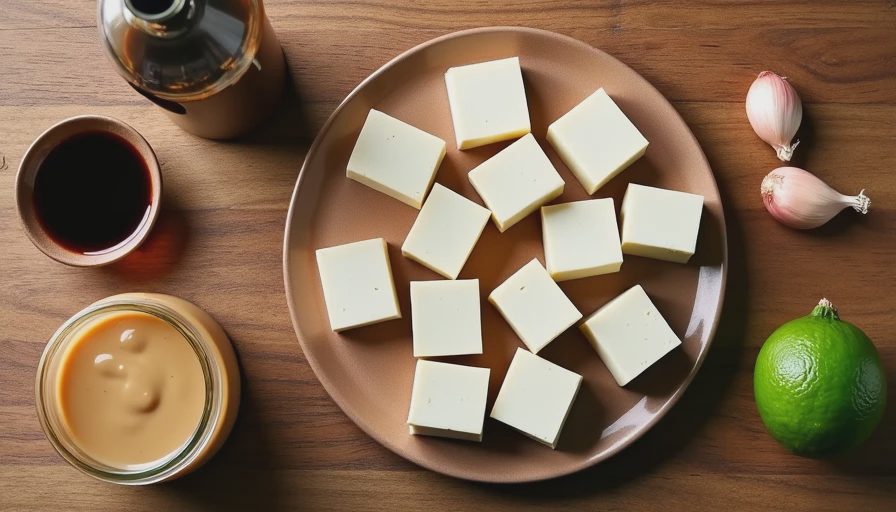
Step 3: Make the peanut sauce
While the tofu roasts, combine the peanut butter, soy sauce, rice vinegar, lime juice, honey, garlic, and chili flakes (if using) in a bowl. Whisk in warm water a little at a time until the sauce is smooth and pourable. Taste and adjust — more lime for brightness, more soy for salt.
Step 4: Assemble
Toss the roasted tofu in half the sauce. Serve over rice or noodles. Top with cucumber, carrots, herbs, and crushed peanuts. Drizzle the remaining sauce over everything.
What Matt Thought
Matt took a bite. He chewed. He took another bite.
He said, "This is really good. The sauce is great. The tofu is crispy. It is like ... not tofu. It is like little crispy things in peanut sauce."
I asked him if he would eat it again.
He said, "Yeah, I would. This is a lot better than the stir-fry you made last time."
That is Matt-speak for "I have been converted."

What I Learned from This Strategy
Lesson 1: Sauce matters more than the protein
When you are cooking for a skeptical eater, the sauce is the star. If the sauce is good enough, the protein becomes delivery vehicle. Matt did not care that he was eating tofu. He cared that the peanut sauce was delicious.
Lesson 2: Crispy texture is a trust-builder
Matt trusts crispy food. He has spent his whole life eating crispy chicken, crispy bacon, crispy anything. When tofu is crispy, it behaves like food he already knows. The unfamiliar texture is replaced by a familiar one.
Lesson 3: Familiar formats win
Tofu in a rice bowl with cucumber and carrots reads as "Thai food," not "weird vegetarian thing." The format tells Matt what to expect. The expectation makes the eating easier.
The Peanut Sauce Method (Not Just for Tofu)
Once you have the peanut sauce method, you can use it for everything.
Protein | Use It For |
|---|---|
Tofu | Roasted tofu cubes (above) |
Chicken | Grilled or shredded chicken with peanut sauce dressing |
Shrimp | Toss grilled shrimp in peanut sauce and serve over rice noodles |
Tempeh | Pan-seared or roasted, same method as tofu |
Vegetables | Roasted broccoli, cauliflower, or green beans with peanut sauce drizzle |
The sauce is the constant. The protein changes. The result is always good.
Substitution Logic
Instead of ... | Use ... |
|---|---|
Extra-firm tofu | Firm tofu, or tempeh |
Peanut butter | Almond butter, cashew butter, or sunflower seed butter |
Soy sauce | Tamari or coconut aminos |
Rice vinegar | White wine vinegar or lime juice |
Honey | Maple syrup or brown sugar |
Chili flakes | Fresh chili, sriracha, or gochujang |
The Takeaway
Tofu is not the problem. The problem is how tofu is usually served.
Press it. Roast it. Dress it in a sauce that is rich, savory, and familiar. Serve it in a format that feels like dinner, not like a health experiment.
Matt has now eaten tofu three times this month. He has not complained once.
If it can work for a Texas engineer, it can work for almost anyone.
— Elena




No comments yet — grab the first one.