
I need to tell you about the first time I made Thai green curry for Matt.
It was early in our relationship. I was still trying to impress him. I made it the way I learned in Bangkok — fragrant, spicy, layered with fresh herbs and a serious amount of chili.
Matt took one bite, put his fork down, and said, "That is really spicy. Like, I cannot taste anything else."
He was not being rude. He was being honest. And he was right — I had not calibrated for a palate that grew up on Tex-Mex and barbecue sauce.
I did not make green curry again for two years.
Then I figured out the trick.
The Problem with Green Curry (For Skeptical Eaters)
Green curry is intimidating for people who did not grow up with it.
The color is bright. The aroma is herbal in a way that reads as "perfume" to some noses. The heat can be aggressive. And the flavor profile — coconut richness combined with fish sauce, lime, and galangal — does not map neatly onto any familiar Western dish.
For a cautious eater, green curry registers as "a lot."
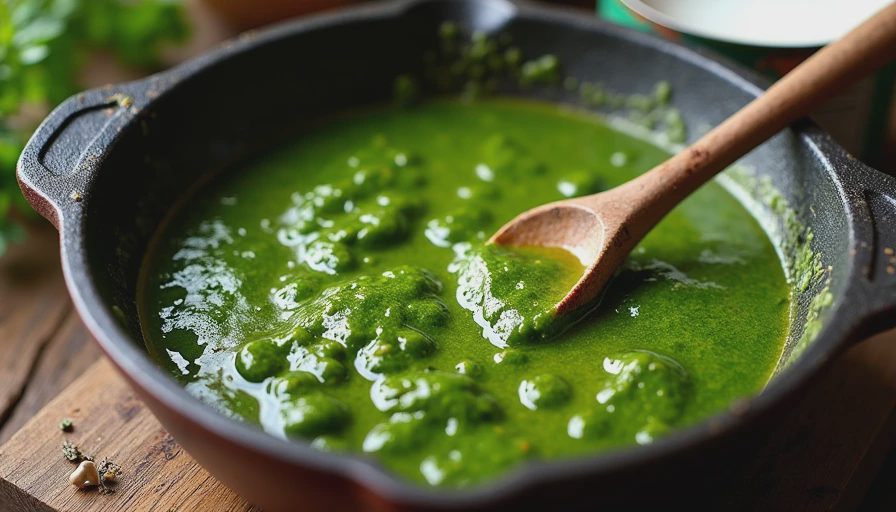
But here is the thing: green curry is fundamentally a comfort food in Thailand. Rich, coconutty, salty, a little sweet, served over rice. The flavor architecture is not foreign — the language is foreign. Once you translate it into familiar terms, it works.
So I stopped trying to make Thai green curry. I started making curry that Matt would eat.
The Three Adjustments
I made three changes. That is all it took.
Adjustment 1: Tone down the heat (but not the flavor)
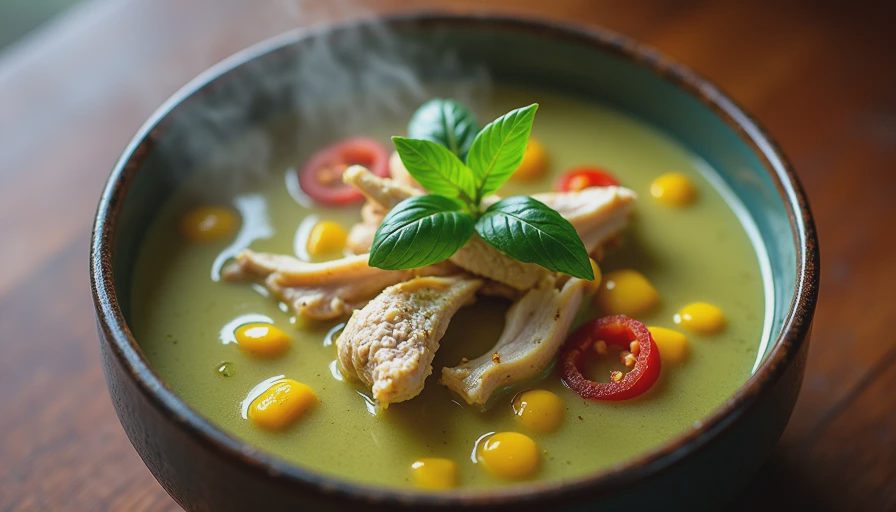
I cut the chilies in half and added sweet corn. Corn sounds like an odd addition, but it does two things: it adds sweetness that balances the spice, and it gives the curry a familiar, recognizable element that makes the rest of the dish feel less intimidating. Matt picks around the corn sometimes. That is fine. The flavor is already in the sauce.
I also use coconut cream instead of coconut milk at the start of the cooking process. Coconut cream has more fat, which mutes heat and carries flavor more efficiently. It makes the curry feel richer and less "thin."
Adjustment 2: Introduce the flavor in a familiar vehicle
The first time I reintroduced green curry, I did not serve it as a soup. I served it as a sheet-pan dinner. I roasted chicken and vegetables, tossed them in a green curry sauce at the end, and called it "Thai-style sheet-pan chicken."
Same flavor. Different format. The sheet pan made it feel like food he already understood.
Adjustment 3: Build the flavor gradually
I did not start with a full-blown curry. I started by adding a teaspoon of green curry paste to a coconut milk-based sauce for a different dish. He did not notice. The next time, I added two teaspoons. The next time, I made a mild version and put chili flakes on the table for me to add.
By the time I made the full version, the flavor was not foreign to him anymore. It was familiar. He had been eating it all along.
The Recipe That Converted Him
Here is the exact version I served the night Matt asked for seconds.
Ingredients:
1 tablespoon neutral oil
2 tablespoons Thai green curry paste (I use Maesri — it is consistent)
1 can (13.5 oz) coconut cream
1 cup chicken broth or water
1.5 lbs boneless chicken thighs, cut into chunks
1 cup fresh or frozen corn kernels
1 red bell pepper, sliced
1 zucchini, sliced (optional — I had it, I used it)
2 tablespoons fish sauce
1 tablespoon brown sugar or palm sugar
Juice of 1 lime
Fresh basil (Thai basil if you have it, regular basil works too)
Cooked rice, for serving
Method:
Heat the oil in a large pot or Dutch oven over medium heat. Add the green curry paste and cook for 1 to 2 minutes, stirring constantly, until it smells fragrant and the color darkens slightly. This step is important — it wakes up the paste.
Pour in the coconut cream. Stir until it is fully combined with the paste and starts to bubble. The oil will separate slightly. That is fine.
Add the chicken broth, fish sauce, and brown sugar. Bring to a simmer. Add the chicken and cook for 10 minutes.
Add the corn, bell pepper, and zucchini. Simmer for another 5 to 7 minutes, until the chicken is cooked through and the vegetables are tender but still have some texture.
Remove from heat. Stir in the lime juice. Taste. If it needs more salt, add a splash more fish sauce. If it is too intense, add another splash of coconut milk or broth.
Serve over rice. Top with fresh basil.
What Matt Said This Time
Matt took a bite. Then he took another. Then he looked at me and said, "This is actually really good. Like, I would choose this."
I asked if it was too spicy.
He said, "No, it is warm but not crazy. The corn makes it sweet. It is like a savory coconut soup with chicken. I could eat this again."
He finished his bowl. He asked if there were leftovers for lunch the next day.
That is the moment I knew I had solved the problem.
The Lesson
Here is what I learned from this process.
Cautious eaters are not hopeless. They are just underexposed. Their resistance is not about a lack of adventurousness — it is about a lack of context.
If you throw a completely unfamiliar dish at someone, their palate does not know how to interpret it. It registers as confusion or overwhelm. But if you introduce the flavors gradually, in formats they already understand, the brain learns to recognize and enjoy the new taste.
It is the same logic behind teaching kids to eat vegetables. Small exposures. Familiar preparations. Repeated attempts.
Matt was a green-curry toddler. I treated him like one. And now he likes the stuff.
The Master Note
This is not a recipe for "dumbed-down" Thai food. It is a recipe for accessible Thai food. The flavor is still there. The fish sauce is still there. The curry paste is still there. I just adjusted the format, the heat level, and the presentation to match the person eating it.
That is not compromise. That is hospitality.
If you have a cautious eater at your table, do not give up on them. Just back up and try again from a different angle. Find the format that works. Build from there.
It took me two years to get Matt to like green curry. Now it is one of his favorite things I make.
If it can work for a Texas engineer, it can work for almost anyone.
— Elena




No comments yet — grab the first one.