This honey baked ham glaze copycat recipe is for the moment when you want that shiny, caramelized holiday ham experience without paying restaurant prices or ordering a special kit. The sauce takes about five minutes to mix, uses regular grocery-store ingredients, and gives a spiral-sliced ham a sticky crust with balanced sweetness instead of one-dimensional sugar.
The main trick is timing. If the glaze goes on too early, the sugars can burn before the ham is hot. If it goes on too late, it sits on the surface without becoming glossy. Here is the version that works on a Tuesday, a Sunday brunch, or the kind of December dinner where three people arrive with unexpected side dishes.
What makes this glaze taste like the original
A good honey baked ham glaze copycat recipe needs more than honey and brown sugar. Honey supplies floral sweetness and helps the surface shine. Brown sugar adds deeper molasses flavor and creates the beginnings of a caramelized crust. Dijon mustard keeps the mixture from tasting like pancake syrup, while apple cider vinegar adds enough acidity to make another bite appealing.
For one 8- to 10-pound fully cooked spiral-sliced ham, gather one-third cup honey, one-half cup packed light brown sugar, two tablespoons Dijon mustard, one tablespoon apple cider vinegar, one teaspoon smoked paprika, one-half teaspoon ground cinnamon, and one-fourth teaspoon ground cloves. Add a small pinch of cayenne if your table enjoys a little heat. The cayenne should sit in the background, not announce itself like a smoke alarm.
You can use dark brown sugar for a stronger molasses note, though light brown sugar gives the familiar honey-glazed profile. Real maple syrup can replace half of the honey, but do not replace all of it unless you want a thinner sauce. Whole-grain mustard also works, leaving little mustard seeds across the crust.

How to make the glaze and prepare the ham
Place the honey, brown sugar, Dijon, vinegar, paprika, cinnamon, and cloves in a small saucepan. Warm over medium-low heat for two to three minutes, stirring until the sugar dissolves. Do not bring it to a hard boil. You are making a brushable glaze, not candy, and boiling concentrates the mixture faster than the ham can handle.
Taste it while warm. It should be sweet first, tangy second, with gentle spice at the finish. If it seems flat, add another teaspoon of vinegar. If it tastes too sharp, stir in one tablespoon of honey. This adjustment is easier before the sauce touches the ham, when nobody has to scrape glaze off a roasting pan and call it dinner.
Heat the oven to 325 degrees Fahrenheit. Place the ham cut side down in a roasting pan and add about one-half cup water, apple juice, or broth to the bottom. Cover the pan tightly with foil. Bake according to the package directions, usually until the center reaches 140 degrees Fahrenheit for a fully cooked ham being reheated. A thermometer is more reliable than the clock because ham sizes and oven behavior vary.
Uncover the ham during the final 25 to 30 minutes. Brush on a thin layer of the glaze, aiming between the slices where possible. Repeat every 8 to 10 minutes. Thin layers build a better crust than one thick coating, which tends to slide down the ham and pool in the pan.
Getting the caramelized crust without burning it
The best part of a honey baked ham glaze copycat recipe is the crackly, lacquered exterior, but sugar needs supervision. Keep the ham uncovered after glazing and watch the surface during the final ten minutes. If the edges darken too quickly, loosely tent only those areas with foil.
For extra color, move the ham under the broiler for one to two minutes after the final glaze. Stay beside the oven and keep the door slightly open if your broiler manual recommends it. Honey and brown sugar can shift from golden to scorched very quickly. The goal is a deep amber finish, not a blackened crust with a suspicious smell.
Let the ham rest for 15 to 20 minutes before serving. This gives the hot juices time to settle and makes the slices easier to separate. Spoon a little pan juice over the platter, but avoid flooding the crust; too much liquid softens the texture you worked to build.
Smart substitutions for a chaotic fridge
A honey baked ham glaze copycat recipe should survive ordinary pantry problems. No apple cider vinegar? Use white wine vinegar or fresh lemon juice, starting with two teaspoons and adding more if needed. No Dijon? Yellow mustard works, although the flavor will be sharper and less rounded. A teaspoon of Worcestershire sauce adds savory depth, especially if the ham tastes mild.
If you are out of smoked paprika, use regular paprika plus a tiny pinch of chipotle powder, or skip the smoky note entirely. Ground ginger is a useful addition when you want a brighter holiday profile; use one-half teaspoon and reduce the cinnamon slightly. Orange zest, added after the glaze comes off the heat, makes the finished ham taste fresher without making it taste like dessert.
For a smaller 4- to 5-pound ham, halve the glaze. You do not need to halve the cooking temperature, only the quantity. Leftover glaze can be simmered for a minute and served alongside biscuits, roasted sweet potatoes, or a sharp cabbage slaw.
Serving ideas and make-ahead timing
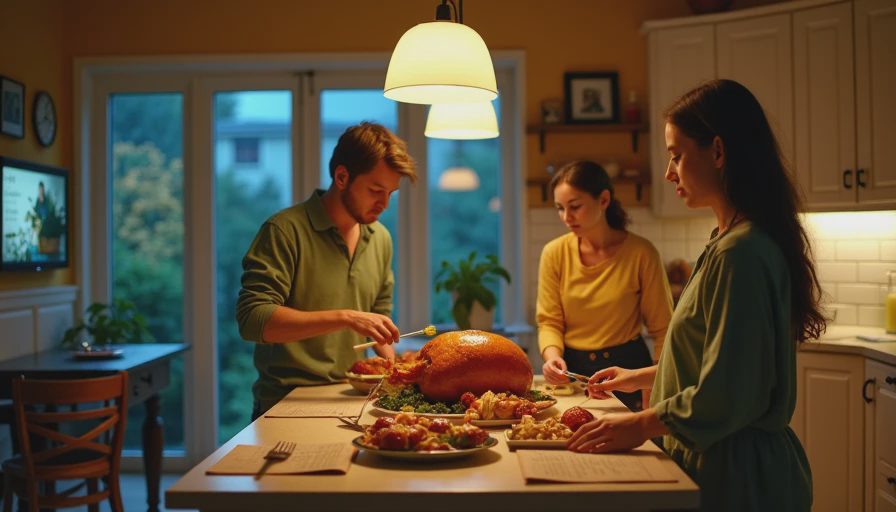
This honey baked ham glaze copycat recipe is rich, so pair it with something crisp, bitter, or tangy. Roasted Brussels sprouts, green beans with lemon, vinegar-based slaw, and a simple arugula salad all cut through the sweetness. For a classic plate, add scalloped potatoes and dinner rolls. For brunch, serve thin ham slices with scrambled eggs and a spoonful of grainy mustard.
You can mix the sauce up to three days ahead and refrigerate it in a covered container. Rewarm it gently in a saucepan or microwave, stirring between short bursts. If it thickens too much, add one teaspoon of water at a time. Do not spread cold glaze over the ham; it will tear at the surface and apply unevenly.
If you are hosting, reheat the ham covered, then glaze it shortly before guests eat. That schedule keeps the meat moist while reserving the dramatic shine for the last half hour. Leftovers hold well in the refrigerator for three to four days and are excellent in grilled cheese, breakfast tacos, fried rice, or a bean soup that needs a smoky, salty boost.
Common questions about the glaze
Can you use pineapple juice? Yes, replace the vinegar with two tablespoons pineapple juice for a fruitier result. The glaze will be sweeter, so add an extra teaspoon of Dijon. Can you use maple syrup? Yes, substitute two tablespoons maple syrup for two tablespoons honey, then check the thickness. Can you glaze a boneless ham? Absolutely; reduce the roasting time based on weight and start checking temperature early because a boneless cut can dry faster.
The most important rule is to glaze late and layer lightly. That is what separates a glossy crust from burnt sugar. This honey baked ham glaze copycat recipe gives you the familiar sweet coating, but the vinegar, mustard, and spice make it taste like actual cooking rather than a jar of candy. Matt was suspicious when I added vinegar. He stopped asking questions after the first sandwich.


No comments yet — grab the first one.