
Let me paint you a picture.
It is 5:45 on a Tuesday. You are standing in front of your open fridge, hoping something has magically appeared since the last time you checked. It has not. There is half a rotisserie chicken from two nights ago, a bag of spinach that is starting to look tired, and a jar of something you bought on a whim that you are not entirely sure how to use.
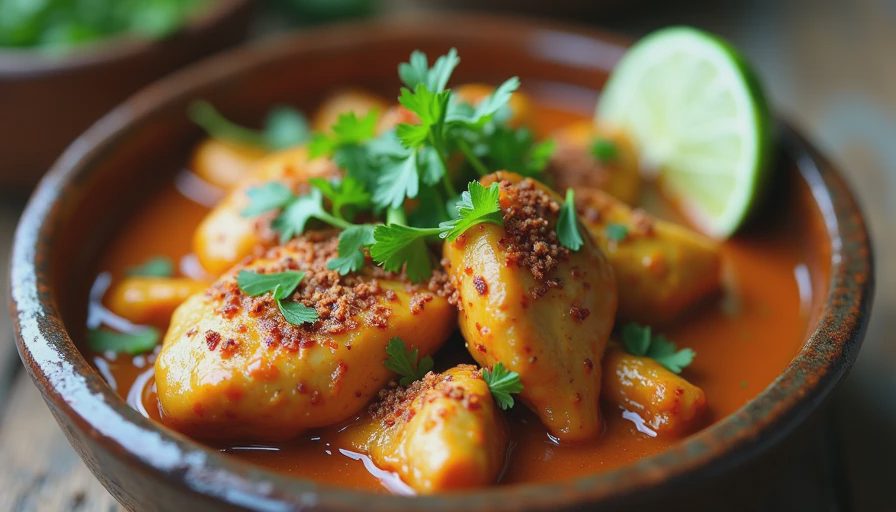
You could order takeout. You could make scrambled eggs. Or — and I am proposing this with genuine enthusiasm — you could make this coconut braised chicken in about the same time it would take for delivery to arrive.
And it will taste like you actually cooked.
Not like you reheated. Not like you "assembled." Cooked.
The Strategy Behind This Recipe
This is what I call a fridge-to-flight recipe. The kind that starts with whatever is already in your kitchen and uses one or two smart pantry items to send it in a completely different flavor direction.
The rotisserie chicken is doing the heavy lifting on protein. You are not cooking raw meat from cold, which saves time and reduces the risk of drying anything out. The coconut milk provides richness without cream. A few pantry staples — fish sauce, ginger, garlic — do the job of building flavor in a way that feels layered but requires almost zero active work.
This is not a Thai curry. It is not a stew. It is somewhere in between, and that is exactly where it belongs on a Tuesday.
The Pantry Shortcut That Makes This Work
The star of this dish is not the chicken. It is the coconut braising liquid, which does all the heavy lifting while you do other things.
Here is the logic: Coconut milk + fish sauce + a little acid + a little sweet = a sauce that tastes like it took hours to develop but actually came together in about eight minutes of stove time. The fat in the coconut milk carries flavor. The fish sauce adds depth and umami without tasting fishy. The acid lifts everything. The sweet balances the salt.
That formula — fat, salt, acid, sweet — works across cuisines. It is how you turn a random collection of fridge ingredients into something that feels intentional.
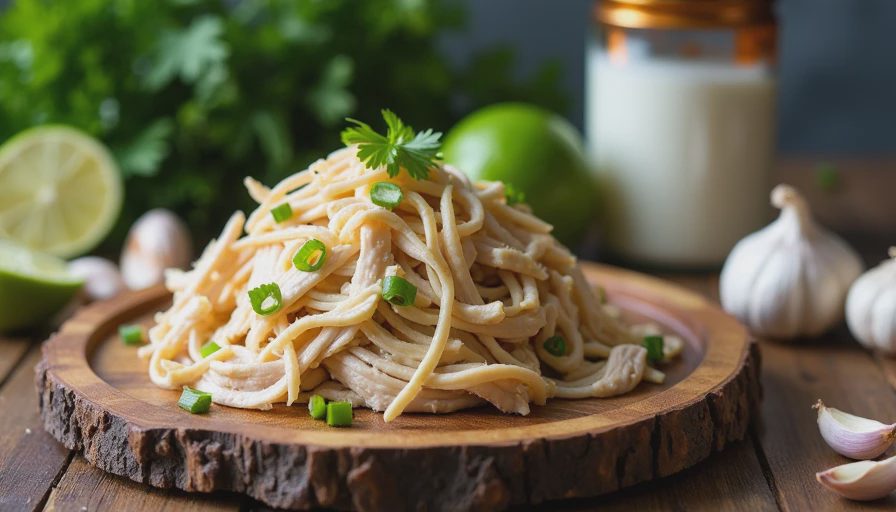
Ingredients
This recipe is designed to be flexible. Use what you have. The only non-negotiable is the coconut milk. Everything else can be swapped.
For the braise:
2 to 3 cups shredded rotisserie chicken (dark meat is better, but white is fine — just add a little extra coconut milk to compensate)
1 can (13.5 oz) full-fat coconut milk — do not use light, it will not create the same texture
1 yellow onion, thinly sliced
3 cloves garlic, smashed and roughly chopped
1 tablespoon fresh ginger, grated (or ½ teaspoon ground ginger in a pinch)
2 tablespoons fish sauce
1 tablespoon brown sugar or honey
1 tablespoon lime juice (or rice vinegar)
1 teaspoon chili flakes or a chopped fresh chili (optional — Matt gets it without)
To serve:
Cooked rice, noodles, or crusty bread
Fresh herbs if you have them — cilantro, basil, mint, whatever is around
Lime wedges
Method
Step 1: Get your aromatics going
Heat a large skillet or Dutch oven over medium heat. Add a splash of neutral oil — just enough to coat the bottom. Toss in the sliced onion and cook for 4 to 5 minutes, stirring occasionally, until it softens and starts to turn translucent. This is where patience pays off. Do not rush the onion.
Add the garlic and ginger. Cook for another 45 to 60 seconds — just until it smells like you are actually cooking something. When I say "cook until fragrant," that is exactly what I mean. It is not a spiritual journey. It is a minute on the stove.
Step 2: Build the braising liquid
Pour in the coconut milk. Add the fish sauce, brown sugar, lime juice, and chili if you are using it. Stir everything together and let it come to a gentle simmer. You are not boiling it — just bringing it to a point where the flavors start to mingle.
Taste it here. This is the critical adjustment moment. Does it need more salt? More acid? A little more sugar? The balance should be rich, salty, sour, and slightly sweet. If it tastes flat, add a pinch of salt or a squeeze of lime. If it tastes too sharp, add a little more sugar. Trust your palate.
Step 3: Add the chicken
Fold in your shredded rotisserie chicken. Stir to coat it in the braising liquid. Let it simmer gently for 5 to 7 minutes, just until the chicken is warmed through and has absorbed some of the coconut flavor. The chicken is already cooked, so you are just marrying flavors here, not cooking from scratch.
If the sauce looks too thick, add a splash of water or chicken broth. If it looks too thin, let it simmer for a few more minutes to reduce. The consistency should be saucy enough to coat rice but not runny like soup.
Step 4: Finish and serve
Stir in a final squeeze of lime juice. Taste one last time. Adjust if needed.
Serve over rice, noodles, or with a hunk of crusty bread to soak up the sauce. Top with whatever herbs you have on hand — cilantro is the classic move, but basil or mint also work beautifully.
What Matt Thought
Matt was suspicious when he saw coconut milk going into a dish with chicken that was not a curry. He said, "Is this going to be sweet?" in a tone that suggested he was already preparing a polite excuse.
I told him to taste it before he judged it.
He took a bite. He chewed. He took another bite.
Then he said, "Okay, I actually really like that. The lime makes it not sweet. It tastes like ... dinner. Proper dinner."
That is Matt-speak for "I will eat this again without complaint."
Substitution Logic — Because Tuesday
This is where the product manager brain kicks in. Here is how to adapt this recipe to what is actually in your kitchen:
Instead of ... | Use this ... |
|---|---|
Rotisserie chicken | Any leftover cooked chicken, turkey, or even pork. Raw chicken works too — just brown it first before adding the liquid, then simmer for 15–20 minutes until cooked through. |
Fish sauce | Soy sauce + a tiny splash of Worcestershire. It is not the same, but it is close enough for a Tuesday. |
Fresh ginger | Ground ginger, ½ teaspoon, but add it with the coconut milk so it dissolves. |
Lime juice | Rice vinegar, white wine vinegar, or even a splash of pickle brine. Acid is acid. |
Brown sugar | Honey, maple syrup, or even white sugar. Just use less if it is a sweeter alternative. |
Onion | Shallot, leek, or even a few scallions if that is all you have. |
Herbs for topping | Whatever green thing is in your fridge. Seriously. Parsley, scallion tops, even spinach leaves — chop them and throw them on top. |
A Note on the Coconut Milk
Do not use light coconut milk in this recipe. It breaks under heat, separates, and produces a texture that is thin and vaguely disappointing. Full-fat coconut milk is the structural backbone of this sauce. It emulsifies, it holds, and it creates that luxurious mouthfeel that makes a simple braise feel like a proper meal.
If all you have is light, add a tablespoon of butter or olive oil at the end to compensate for the lost fat. It is not a perfect fix, but it gets you closer.
Why This Recipe Belongs on Pantry Latitude
This recipe passes the Tuesday test with flying colors.
It uses leftover chicken, so you are not starting from scratch.
It comes together in about 20 minutes of active time.
It uses pantry ingredients that most people either have or can buy once and keep for months.
It introduces a global flavor principle — the coconut-fish sauce-lime combination — without requiring you to buy a whole new cuisine's worth of ingredients.
It scales up easily if you are cooking for more than two people.
This is not restaurant food. It is not something you would serve to impress a chef. It is something you would serve to yourself on a Tuesday when you need dinner to be good without being a whole production.
That is the point. That is always the point.
Over to You
If you make this, let me know in the comments. Tell me what you swapped. Tell me what version you made that I did not even think of. I love a good substitution story.
And if Matt asks for seconds of your version, send photographic evidence. I need to know I am not the only one converting skeptical engineers one coconut braise at a time.
Next time on Pantry Latitude: The Flavor Transfer series kicks off with a post I have been wanting to write for years — Why Fish Sauce Belongs in Your Next Pot of Chili. Bring your skepticism. Bring your questions. Just bring it on a day when dinner actually needs to get done.
— Elena



No comments yet — grab the first one.