If you are wondering how long to cook spaghetti squash, the useful answer is usually 35 to 50 minutes in a 400°F oven. The exact timing depends on the squash’s size, whether you cut it lengthwise or crosswise, and how soft you want the strands. Here’s the version that works on a Tuesday: cut it safely, season it simply, and start checking before the recipe’s timer becomes a commandment.
Spaghetti squash is done when a fork slides through the flesh with moderate resistance and the inside separates into strands. It should not collapse into puree. Think tender noodles with a little structure, not mashed squash wearing a yellow sweater.
How long to cook spaghetti squash in the oven
For the most even texture, heat the oven to 400°F. Carefully cut the squash in half lengthwise, scoop out the seeds, and brush the cut sides with olive oil. Season with salt and pepper, then place the halves cut-side down on a rimmed baking sheet. Roasting cut-side down traps enough steam to soften the flesh while the edges develop a mild, sweet flavor.
A small squash, around 2 pounds, usually takes 30 to 35 minutes. A medium squash around 3 pounds often needs 35 to 45 minutes. A large 4-pound squash can take 45 to 55 minutes. Start checking at the lower end of the range by inserting a fork through the skin into the thickest part of the flesh.
The most common mistake is overcooking. If the fork slides in with no resistance and the strands are wet and mushy, the squash stayed in too long. Remove it when the flesh is tender but still holds its shape. Let the halves cool for five minutes, then rake the flesh with a fork from the outer edge toward the center. That direction helps create longer strands.
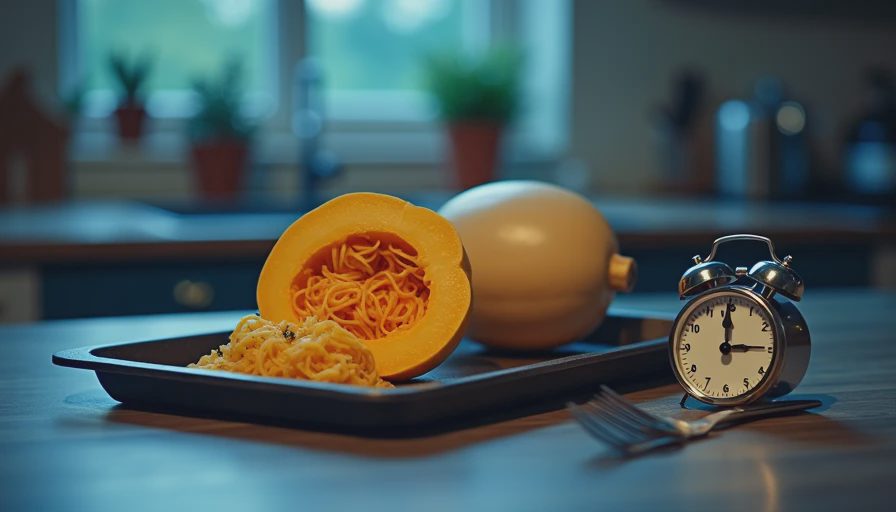
For better browning, turn the halves cut-side up for the final 5 to 10 minutes. This is optional, but useful if you are serving the squash with browned butter, chili crisp, or a tomato sauce and want a little roasted flavor rather than plain steamed vegetables.
How to prepare spaghetti squash before roasting
Choose a squash that feels heavy for its size and has firm, unbroken skin. A pale yellow or cream color is normal; green patches usually mean it was picked early, though the squash can still cook successfully. Wash and dry it before cutting because the skin can carry grit onto the cutting board.
If the squash is difficult to cut, do not force the knife. Pierce it several times with a sharp paring knife, then microwave it for 3 to 4 minutes. Let it rest briefly, and the shell should be easier to slice. You can also roast the squash whole at 400°F for about 60 minutes, but you will need to pierce it first so steam can escape. Cutting it before roasting gives you more control over texture and seasoning.
Save the seeds if you like. Rinse away the stringy pulp, dry them thoroughly, toss with oil and salt, and roast them on a separate pan for 10 to 15 minutes. They make a crunchy topping for the finished strands, especially with lime, cilantro, and a little fish sauce. That combination sounds suspiciously ambitious for a vegetable, but Matt was suspicious, which usually means we’re onto something.
How long to cook spaghetti squash in the microwave
The microwave is the fastest option when dinner is already late. Cut the squash in half lengthwise, remove the seeds, and place the halves cut-side down in a microwave-safe dish. Add about 1 inch of water, then microwave on high for 8 to 12 minutes, depending on size and microwave strength.
For a 2-pound squash, begin with 8 minutes. Add 2-minute bursts until the flesh is fork-tender. Let it stand for several minutes before turning it over because trapped steam can burn your fingers. The microwave produces softer, more steamed strands and almost no browning, so finish them with a hot skillet if you want more flavor.
To do that, scrape the cooked strands into a skillet with olive oil, minced garlic, and red pepper flakes. Cook over medium-high heat for 3 to 5 minutes, stirring only occasionally. The extra contact with the pan evaporates excess water and gives the squash a pleasantly chewy edge. Add grated Parmesan, toasted peanuts, or a spoonful of green curry paste loosened with coconut milk.

How long to cook spaghetti squash in an air fryer
An air fryer works well for small squash halves. Cut the squash lengthwise, remove the seeds, and brush the flesh lightly with oil. Place the halves cut-side up in a 375°F air fryer. Cook for 25 to 35 minutes, checking the thickest section with a fork after 25 minutes.
The air fryer’s circulating heat can brown the edges quickly, so use a lower temperature if your model runs hot. A compact 2-pound squash may finish in 25 minutes, while a larger one may need closer to 40 minutes. If the outside darkens before the center softens, lower the temperature to 350°F and continue cooking.
Air-fryer strands are usually drier than microwave strands, which makes them useful for saucy dishes. Toss them with a peanut-lime dressing, black beans, and sliced scallions, or serve them under shrimp sautéed with garlic and smoked paprika. The squash does not need to impersonate pasta perfectly. It just needs to carry sauce without turning dinner into a watery puddle.
How to tell when spaghetti squash is done
Timing is a guide, but texture is the final test. Insert a fork through the skin near the center of a half. The fork should enter without a wrestling match, but it should meet slight resistance. When scraped, the flesh should separate into visible strands that stay intact on the fork.
If the squash is undercooked, return it to the oven for 5 to 10 minutes, or microwave it in 1-minute increments. If it is already too soft, drain the strands in a colander and sauté them in a wide skillet. You cannot reverse overcooking, but you can remove moisture and improve the texture.
Letting cooked squash sit for 5 minutes before scraping also helps. Excess steam escapes, and the strands become less watery. For meal prep, cool the strands completely before storing them in a covered container. They keep in the refrigerator for about four days and reheat best in a skillet rather than the microwave.
Easy ways to serve the finished strands
For a pantry dinner, toss hot squash with olive oil, lemon zest, Parmesan, and black pepper. For a bolder plate, combine it with sautéed garlic, ginger, soy sauce, sesame oil, and a squeeze of lime. A spoonful of chili crisp adds heat and texture without requiring a second grocery trip.
You can also use the strands as a base for turkey meatballs, roasted vegetables, or leftover rotisserie chicken. Add a sauce after cooking rather than before, since watery sauces can make the squash steam instead of roast. If your fridge is a little chaotic, this is still recoverable: drain the strands, use a hot skillet, and finish with something bright such as vinegar, citrus, or fresh herbs.
The short answer to how long to cook spaghetti squash is 35 to 50 minutes at 400°F, but the fork test matters more than the clock. Once the flesh is tender and strand-like, pull it from the heat. If it works on a Tuesday, it belongs here.




No comments yet — grab the first one.