Can you freeze cooked rice? Yes, and it is one of the most useful ways to rescue a too-large pot before it becomes a science project in the back of your refrigerator. Frozen rice can stay fluffy enough for fried rice, curry bowls, burritos, soups, and quick weeknight dinners when you cool, pack, and reheat it correctly. The process is less about culinary magic and more about moving the rice through the danger zone quickly.
Can you freeze cooked rice safely?
You can freeze cooked rice safely if it has been handled promptly after cooking. Rice can contain spores of Bacillus cereus, a bacteria associated with cooked starchy foods. Cooking does not necessarily eliminate every spore, and leaving rice warm for hours gives bacteria time to multiply. Freezing stops that growth, but it does not make rice safe again after it has been poorly stored.
Spread freshly cooked rice into a shallow layer on a clean baking sheet or divide it among shallow containers. Let steam escape while the rice cools, but do not leave it sitting at room temperature for an entire afternoon. Refrigerate or freeze it within two hours of cooking, or within one hour if your kitchen is above 90 degrees Fahrenheit. In Houston summers, that shorter window is not theoretical; the kitchen can turn warm quickly.
For the best texture, freeze rice while it is still fresh rather than waiting until the last day of its refrigerator life. Rice kept in the refrigerator is generally best used within three to four days. If it smells sour, feels unusually sticky or slimy, or has been forgotten on the counter, discard it instead of trying to freeze it.
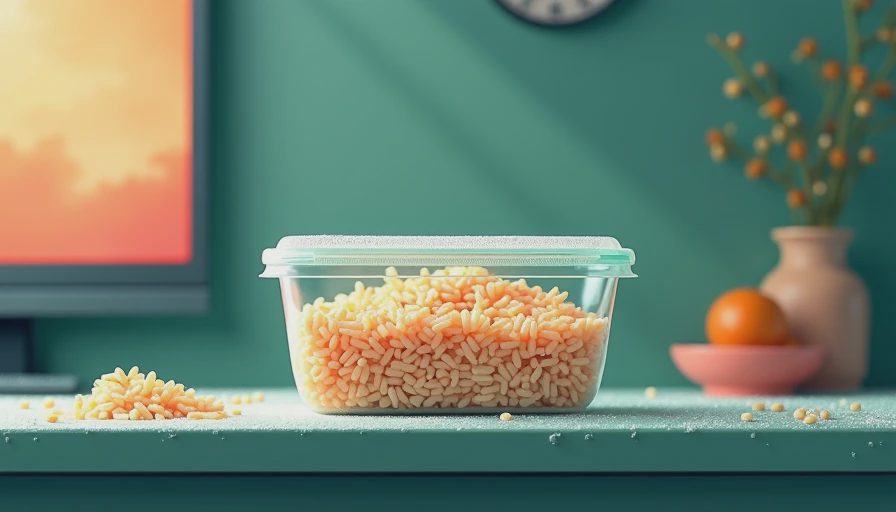
The best way to freeze cooked rice
The best method depends on how you plan to use the rice. For individual lunches, spoon one-cup portions into freezer bags, press out excess air, and flatten each bag into a thin sheet. Flat packages freeze faster and stack neatly. For a family dinner, use a freezer-safe container with a tight lid and leave a little room for expansion.
Label every package with the rice type and date. A permanent marker costs less than one mystery brick of frozen food. White rice, brown rice, jasmine rice, basmati rice, wild rice blends, and seasoned rice can all be frozen, although their textures will differ after reheating. Brown rice often holds up especially well because its firmer grains have more structure.
Avoid freezing rice in a large, deep container. The center cools slowly, and the outside may become dry before the middle freezes. If you have four cups to store, divide it into four portions or spread it across two shallow containers. Once completely cold, you can consolidate smaller bags if freezer space is tight.
How long does frozen rice last?
For the best flavor and texture, use frozen rice within one month. It can remain safe longer when continuously frozen at 0 degrees Fahrenheit, but freezer burn, dried edges, and stale flavors become more likely over time. Airtight packaging makes a noticeable difference. Pressing air from a freezer bag is not glamorous, but it protects the grains better than tossing an open takeout container into the freezer.
Cooked rice with sauce, vegetables, or seasonings can also be frozen, but ingredients react differently. Coconut rice may thaw slightly softer because of its added moisture. Rice mixed with beans usually reheats well. Rice with crisp fried toppings will lose that crispness, so freeze the rice separately and add fresh scallions, toasted peanuts, fried onions, or herbs after reheating.
Can you freeze cooked rice from takeout? Usually, yes, if you refrigerate or freeze it promptly and transfer it from the restaurant container into a freezer-safe package. Thin plastic takeout containers can crack, and cardboard does not protect against freezer air. If the rice has sat in the car or on the table for several hours, freezing is not a rescue plan.

How to thaw and reheat frozen rice
You do not need to thaw rice overnight. For the microwave, place a frozen portion in a microwave-safe bowl, sprinkle it with one or two teaspoons of water, cover it with a vented lid or damp paper towel, and heat in one-minute bursts. Stir between bursts so the center warms evenly. Most single portions take about two to four minutes, depending on the microwave and the amount of rice.
You can also reheat frozen rice in a covered skillet. Add the rice with a tablespoon of water per cup, cover, and warm over medium-low heat. Stir occasionally as the block loosens. This method works well when you are adding sauce, vegetables, eggs, or leftover roast chicken. For food safety, reheat rice until it is steaming hot throughout, ideally reaching 165 degrees Fahrenheit.
Avoid repeatedly cooling and reheating the same batch. Heat only the portion you expect to eat, then refrigerate or discard leftovers promptly. A rice cooker can reheat frozen rice, but check the manufacturer’s instructions and add a little water so the bottom does not dry out.
Best uses for frozen cooked rice
Frozen rice is excellent for meals where a little texture change will not matter. Use it under Thai-style curry with coconut milk, alongside black beans and roasted peppers, or in a quick bowl with kimchi, a fried egg, and sesame oil. It is also ideal for fried rice because chilled grains separate more easily than freshly cooked ones. Add the frozen rice directly to a hot pan only if the pieces are small enough to break apart safely; otherwise thaw it first so the vegetables do not burn while the center stays cold.
For soup, add frozen rice near the end of cooking. It will absorb broth as it warms, so start with less rice than you think you need. For stuffed peppers or casseroles, thawing is helpful because it lets you mix the grains with sauce evenly. Plain frozen rice is a flexible base, not a finished meal, which is exactly why it earns freezer space.
A Tuesday-friendly storage routine
When I make rice, I portion the extra before dinner reaches the table. One cup goes into the refrigerator for tomorrow’s lunch, and the rest goes into labeled freezer portions. This takes about five minutes and prevents the familiar end-of-week question: Is this still good, or am I negotiating with bacteria?
For a couple, half-cup portions are useful for breakfast bowls and soups, while one-cup portions suit dinner. Families can freeze two-cup packages for a shared meal. If your fridge is a little chaotic, this is still recoverable: date the package, keep it flat, and place newer portions behind older ones. Can you freeze cooked rice and make it taste freshly cooked? Not perfectly, but a little water, a covered container, and even heating get surprisingly close.
The practical answer is yes: can you freeze cooked rice without wasting dinner? Absolutely. Cool it quickly, package it in useful portions, protect it from air, and reheat it thoroughly only once. If it works on a Tuesday, it belongs here.



No comments yet — grab the first one.