Boneless turkey breast is one of those grocery-store ingredients that can become either a dependable dinner or a dry, apologetic slab of poultry. The difference is not culinary magic. It is choosing a method that protects lean meat, adds flavor before it hits the oven, and gives you a clear stopping point. Here is the version that works on a Tuesday: a short savory marinade, a hot start, a gentler finish, and a pan sauce that makes the whole plate feel intentional.
This recipe serves four, with enough leftovers for sandwiches, rice bowls, or a quick noodle dinner. Look for a boneless turkey breast roast weighing about 2 to 3 pounds. Some are netted and tied, while others arrive as a single trimmed piece. Both work. If the roast is frozen, thaw it in the refrigerator for roughly 24 hours rather than trying to negotiate with an icy center at dinnertime.
The flavor plan: savory, bright, and flexible
Turkey likes salt, fat, and assertive aromatics. For the marinade, combine 3 tablespoons olive oil, 2 tablespoons soy sauce, 1 tablespoon maple syrup, 1 tablespoon lime juice, 2 grated garlic cloves, 1 teaspoon smoked paprika, and half a teaspoon black pepper. The soy sauce brings salt and umami, maple helps the exterior brown, and lime keeps the flavor from becoming heavy. It is a practical fusion combination, not a passport application.
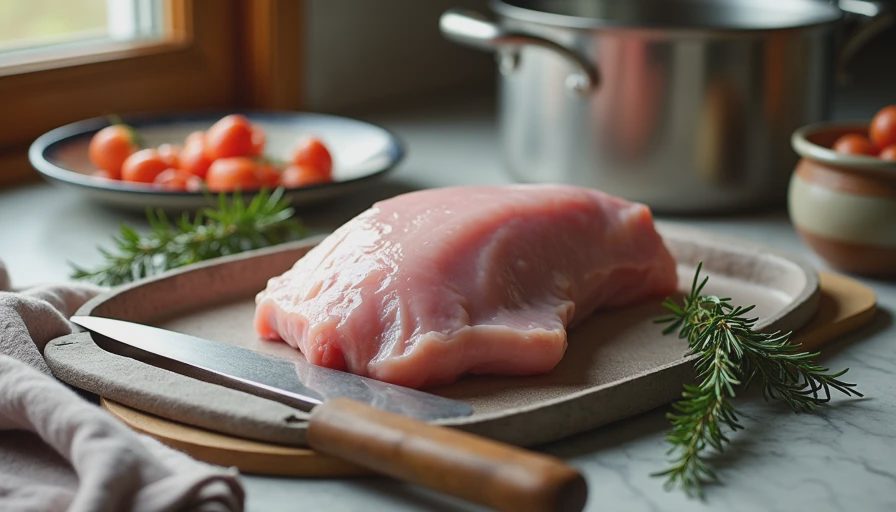
Pat the boneless turkey breast dry first. This helps the marinade cling and gives the surface a better chance of browning. Rub the mixture over every side, then refrigerate the roast in a covered container or sealed bag for at least 30 minutes and up to 8 hours. Longer is not automatically better; the lime can make the outer layer slightly soft if it sits too long.
If your fridge is a little chaotic, this is still recoverable. No lime? Use lemon or a teaspoon of rice vinegar. No maple syrup? Brown sugar works. Low-sodium soy sauce is useful, but regular soy sauce is fine if you avoid adding extra salt elsewhere. The design goal is a seasoned roast with a glossy, savory exterior.
How to roast it without drying it out
Take the roast from the refrigerator while the oven heats to 425 F. Letting it sit for 15 to 20 minutes takes the chill off the surface, but do not leave raw poultry at room temperature for an extended period. Place the boneless turkey breast on a rack set inside a small roasting pan or on a foil-lined sheet pan. If it has netting, follow the package directions about removing it; many tied roasts are cooked with the netting on and removed after resting.
Roast at 425 F for 15 minutes, then reduce the oven to 350 F. Continue cooking until the thickest center reaches 160 to 165 F on an instant-read thermometer. Start checking around 45 minutes for a 2-pound roast. A larger piece can take 60 to 80 minutes, but temperature matters more than the clock. Insert the thermometer from the side into the thickest section, avoiding the pan and any hollow pocket.
Why the two-temperature approach? The initial heat improves color, while the lower temperature gives the center time to cook without turning the outside into upholstery. Turkey breast is lean, so it has little spare fat to rescue an overcooked roast. If the top darkens too quickly, tent it loosely with foil. Do not wrap it tightly, or you will steam away the browned surface you worked for.
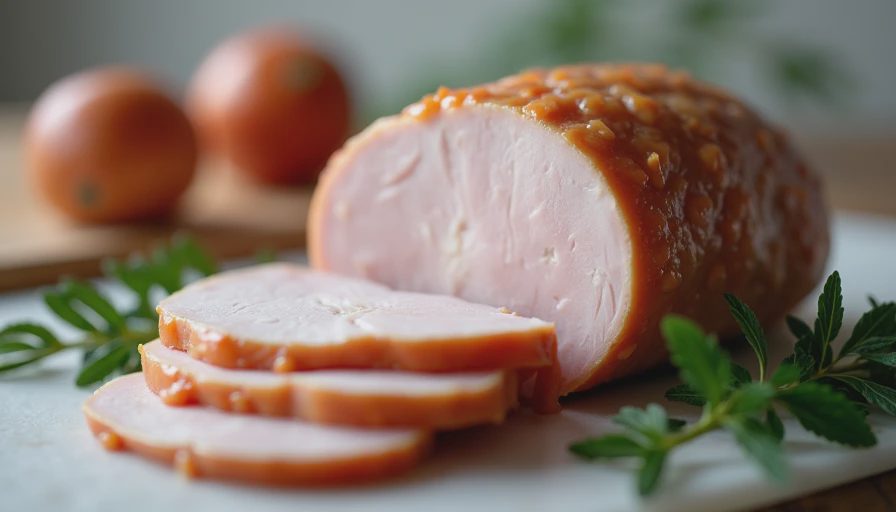
When the boneless turkey breast reaches 160 F, remove it and tent it loosely. Rest for 15 minutes. Carryover cooking will often bring the center up a few degrees, and the rest allows the juices to settle. Slice across the grain into pieces about a quarter-inch thick. Thin slices are especially useful here because they make a lean roast feel more tender and distribute the sauce across every bite.
Make a fast pan sauce while the turkey rests
Put the roasting pan over low heat if it is stovetop-safe, or scrape the drippings into a small saucepan. Add half a cup of chicken stock, 1 tablespoon lime juice, and 1 teaspoon soy sauce. Scrape up the browned bits and simmer for 3 to 5 minutes. Whisk in 1 tablespoon cold butter at the end. The result should be loose enough to spoon over the slices, not thick like gravy.
For a sweeter, brighter sauce, add another teaspoon of maple syrup. For heat, stir in a teaspoon of chili crisp or a pinch of red pepper flakes. A spoonful of coconut milk makes the sauce rounder, though it will turn paler and less sharply savory. Matt was suspicious of the chili crisp version, which usually means we are onto something; he went back for sauce before admitting it worked.
If the pan juices look greasy, spoon off some fat before adding stock. If they taste too salty, dilute with another splash of unsalted stock or water and add lime. Sauce is a correction tool as much as a finishing touch. It can fix a roast that is slightly under-seasoned, but it cannot repair meat that has been cooked far past its target temperature.
What to serve with boneless turkey breast
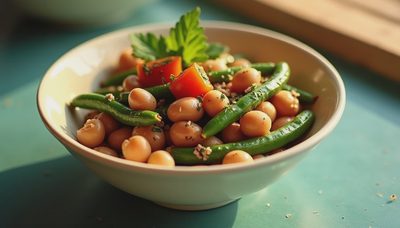
Build the plate around contrast. Steamed jasmine rice or roasted sweet potatoes provide a mild base for the savory sauce. Add something green and crisp, such as cucumber tossed with lime, cilantro, and a pinch of salt. Charred green beans, broccoli, or frozen edamame also work well and require very little planning.
For a more complete global-style dinner, serve the boneless turkey breast with coconut rice, quick-pickled onions, and a crunchy cabbage slaw. The pickles cut through the maple and soy, while cabbage gives the soft roast some texture. You can also put everything into tortillas with avocado and salsa for a turkey taco situation. It is not precious, and it does not need to be. If it works on a Tuesday, it belongs here.
Plan on about 6 ounces of cooked turkey per person for dinner, depending on the sides and appetites. Leftovers should be refrigerated in a shallow container within two hours and used within three to four days. Reheat slices gently with a spoonful of stock or sauce so they stay moist. Cold slices are excellent in sandwiches with mayonnaise, mustard, pickled vegetables, and shredded lettuce.
A practical troubleshooting checklist
If the roast is bland, the likely issue is not the sauce; it needed more seasoning time or a more thorough coating. If the outside is dark but the center is undercooked, cover the top loosely with foil and continue at 350 F. If the turkey is dry, slice it thinly and serve it with extra sauce, then reduce the next roast’s cooking time by checking earlier.
A boneless turkey breast can also be prepared in an air fryer if the piece fits comfortably, but follow the appliance’s capacity and temperature guidance. Large roasts cook more evenly in a conventional oven. Avoid relying on color or clear juices as proof of doneness; an instant-read thermometer is the useful bit of equipment here, and many cost less than a takeout lunch.
You can swap the flavor profile without changing the method. Use grated ginger and sesame oil for a sharper finish, cumin and orange for a warmer one, or Dijon mustard and rosemary for a familiar Sunday-roast direction. Keep the core system intact: dry the meat, season it, cook by temperature, rest before slicing, and use sauce strategically. That is how this cut becomes repeatable instead of risky.
When you need a dinner that feels more interesting than plain roasted poultry but still fits a regular grocery run, this boneless turkey breast method earns its place. It gives you a flexible centerpiece, useful leftovers, and enough flavor to make ordinary sides feel connected. No restaurant-level complexity, no free afternoon required, and no spiritual journey when a thermometer will do.



No comments yet — grab the first one.