
The hardest part of cooking for a crowd is not the cooking. It is the math.
You know the recipe feeds four. You have six coming. So you multiply everything by 1.5 and hope for the best. Then you run out of pan space, the rice takes twice as long to cook, and you are plating while guests are already seated.
I have done that. I do not do it anymore.
Now I use a rice bowl system that scales to any number without breaking.
The Assembly Line Method
The secret is components, not recipes.
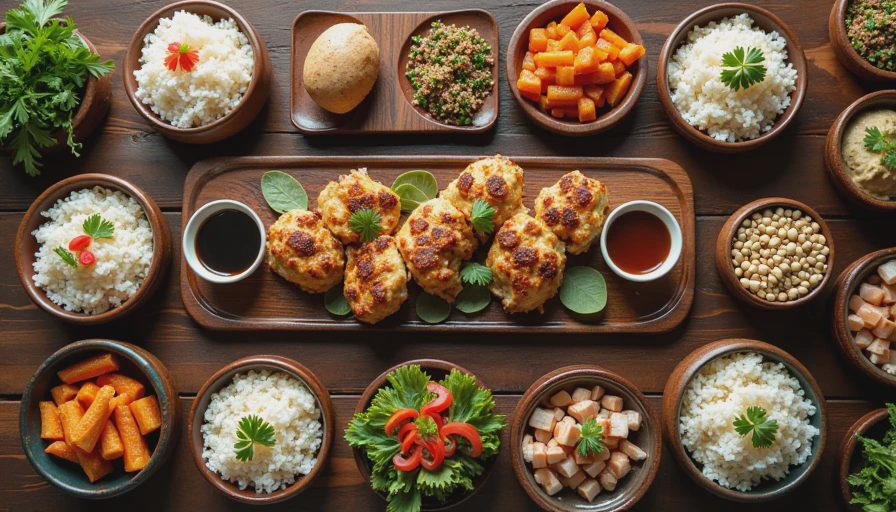
Everything is made separately. Everything stays warm. Guests assemble their own bowls at the table. You cook once. Everyone eats what they want.
Station | What It Holds |
|---|---|
Base | Rice, quinoa, or noodles |
Protein | One main meat or tofu, sliced |
Vegetables | 2–3 options, roasted or sautéed |
Sauces | 2 options, one mild one bold |
Toppings | Herbs, nuts, pickled veg, crispy bits |
That is it. Each component is simple. Together, they feel like a feast.
Scaling Math You Can Actually Use
Use the 1.5× rule, but only for the components that need it.
Component | Scaling Logic |
|---|---|
Rice | ¾ cup uncooked per 4 people → increase to 1 cup for 6 |
Protein | 1.5 lbs for 4 → 2 lbs for 6, but slice and serve at the table |
Vegetables | One extra vegetable, not more of each |
Sauces | Make extra. Always. It keeps. |
The key: cook the protein and vegetables in two batches if needed. Do not overcrowd the pan. Overcrowding = steaming = sad texture. Two batches take the same time as one overcrowded batch.
The Warm-Holding Trick
Components stay warm while guests arrive. Here is how:
Rice: Keep in a covered pot off the heat. Stays warm 45+ minutes.
Protein: Slice and arrange on a platter. Cover loosely with foil.
Vegetables: Serve at room temperature or warm in the oven on a sheet pan for 5 minutes before guests sit.
Nothing has to come out of the pan at the exact right moment. That is the point.
The Test Run
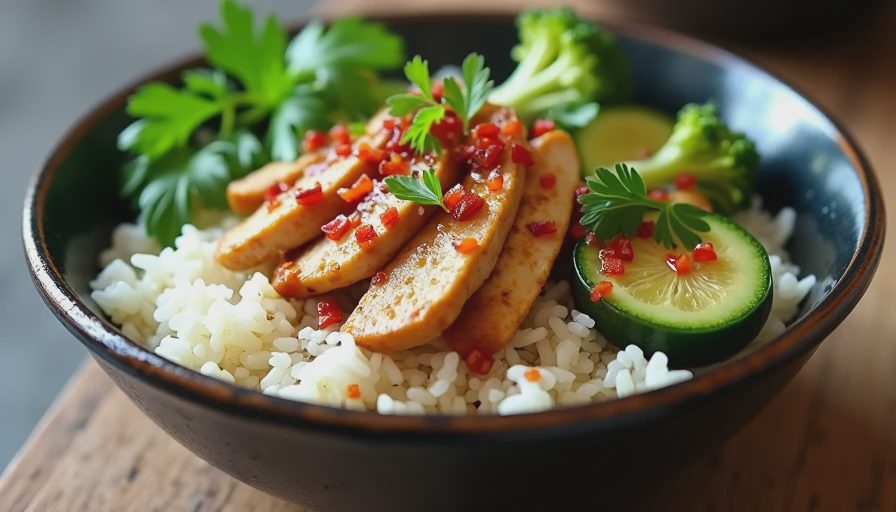
I used this system last month for six people. Here is what I made:
Base: Jasmine rice with a little lime zest
Protein: Miso-yogurt chicken thighs, grilled and sliced
Veg: Roasted broccoli and quick-pickled cucumbers
Sauces: Peanut sauce and a simple lime-ginger vinaigrette
Toppings: Crushed peanuts, cilantro, chili flakes
Setup time: 20 minutes.
Cooking time: 45 minutes.
Cleanup: The guests were too full to leave quickly. I called that a win.
The Portion Math Cheat Sheet
Number of Guests | Rice (uncooked) | Protein | Vegetables | Sauce |
|---|---|---|---|---|
4 | 1 cup | 1.5 lbs | 2 types | 1.5 cups total |
6 | 1.5 cups | 2 lbs | 3 types | 2 cups total |
8 | 2 cups | 2.5 lbs | 3 types | 2.5 cups total |
This works for almost any combination of ingredients. The ratios are consistent.
What I Learned from Running This System
I have used this method four times now. Here is what I know:
Guests love building their own bowls. It is interactive without being gimmicky.
Dietary restrictions are easy. Vegetarian? Skip the meat and add tofu. Gluten-free? Use tamari instead of soy sauce. Everyone builds their own combination.
Leftovers are intentional. Extra components become lunch the next day. I have started cooking extra rice on purpose.
The host does not get stuck in the kitchen. Once everything is on the table, I sit down and eat with everyone.
The Takeaway
Rice bowl dinners are crisis-proof because they are modular.
You do not plate. You do not time everything to finish simultaneously. You present components and let people build their own meal.
The result is less stress for you and more flexibility for everyone else.
— Elena


No comments yet — grab the first one.